
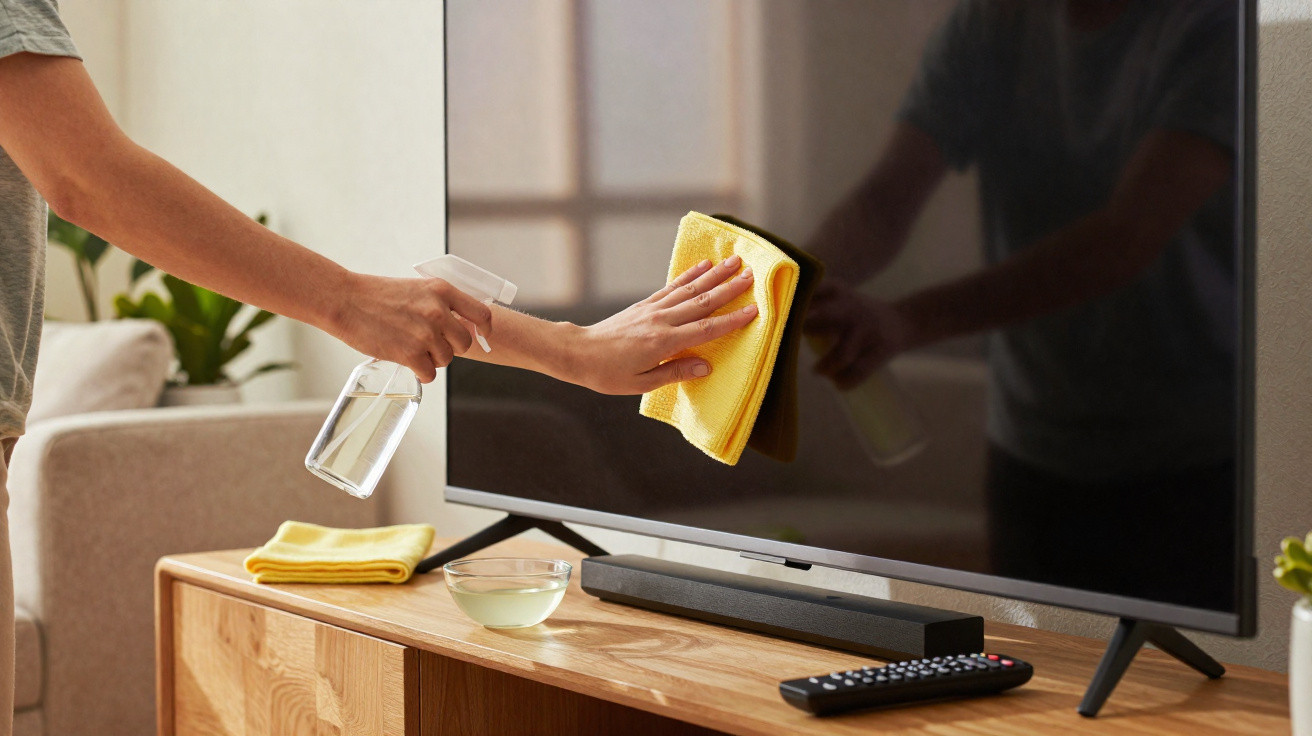
Why your TV screen needs gentler care
Poeira, marcas de dedos e até germes que você nem vê vão se acumulando na tela da TV sem fazer barulho. Aos poucos, isso tira o brilho das cores e faz seus olhos “trabalharem” mais do que deveriam no dia a dia.
Quando aparece aquela película meio opaca, muita gente corre para sprays mais fortes - e aí vem o risco: manchas, marcas e até dano permanente. Por isso, cada vez mais pessoas estão voltando ao básico e usando um item comum de cozinha, deixando detergentes e desinfetantes de lado.
Modern TVs look tough, but their screens are delicate layers of plastic, glass and coatings designed to boost contrast and cut reflections. Strong chemicals can strip those coatings. Rough cloth can leave micro-scratches that you only notice when light hits the screen.
As televisions moved from bulky CRT sets to ultra-thin LED, OLED and QLED displays, cleaning habits didn’t always keep up. Many people still use products meant for windows or bathroom tiles, even though manufacturers warn against them in the small print.
Yet the screen collects more than just dust. It receives:Most TV brands advise: no alcohol, no ammonia, no classic glass cleaner, and no paper towels on the screen.
- Fine airborne particles from cooking or candles
- Skin oils from fingerprints and accidental touches
- Micro-droplets from sneezes and coughs
- Residues from household sprays used nearby
The key is not just “vinegar”, but the right mix: low concentration, soft cloth, and zero direct spray on the screen edge.
Why distilled water, not tap water? Minerals in tap water can leave spots and halos when they dry. Distilled water has those minerals removed, so it evaporates cleanly and reduces streaks.
| Component | Role in the mixture | Risk level for the screen* |
|---|---|---|
| White vinegar (diluted) | Degreases, helps dissolve light grime | Low, if used in small amounts and not pure |
| Distilled water | Dilutes vinegar, avoids mineral spots | Very low, if not over-applied |
| Microfibre cloth | Lifts dust without scratching | Very low, if clean and not abrasive |
*Risks increase if liquid seeps inside the frame or the mixture is too strong.
How to clean your TV with vinegar and no detergents
The technique matters as much as the ingredient. If you do it the wrong way, even water can reach the electronics. If you do it right, it’s a fast, low-risk routine.
Step 1: Power down and unplug
Turn the TV off and, if possible, unplug it. With a dark screen, smudges are easier to spot, and the panel has time to cool. Wiping a warm screen can make the liquid dry too quickly, causing streaks and uneven marks.
Step 2: Mix the solution
Prepare a gentle cleaning mix in a clean spray bottle:
- 1 part white vinegar
- 1 part distilled water
Shake lightly. You don’t need a strong concentration; a mild mix already loosens skin oils on the surface.
Step 3: Never spray the TV directly
Use a clean microfibre cloth and spray the solution onto the cloth - not onto the TV. The cloth should be just slightly damp, never soaked. If liquid drips when you squeeze it, you’ve applied too much.
Liquid that runs down into the bezel or ports can cause damage long before the screen shows any visible problem.
Step 4: Wipe with light, controlled movements
Apply minimal pressure and wipe in straight passes or wide circles, starting at the top and moving downward. Don’t scrub at stubborn spots. Give the vinegar a moment to act instead of pressing harder.
For fingerprints, you can briefly press the damp part of the cloth against the mark, then wipe. That short pause helps soften oily residue so it lifts with less effort.
Step 5: Dry and polish with a second cloth
Grab a second, dry microfibre cloth and go over the screen to remove leftover moisture and any streaks. Inspect the panel from the side under light; faint lines often only appear at an angle.
Why you should skip disinfectant sprays and classic cleaners
Many households leaned on strong disinfectant sprays during the pandemic, including on remote controls and sometimes even TV screens. The habit stuck around, but it’s not a good match for modern panels.
Alcohol, ammonia and harsh solvents can wear down anti-reflective and anti-glare coatings. Over time, this may create cloudy areas, rainbow-like patterns, or permanent dull patches where the screen used to look smooth and rich.
Paper towels and kitchen roll can also be a problem. They may feel soft, but they contain tiny fibres and can act like extremely fine sandpaper on delicate surfaces.
Swapping one harsh spray and a roll of paper towels for diluted vinegar and a microfibre cloth can extend the life of your TV’s finish by years.
How often should you clean your TV?
The ideal schedule depends on your home. A living room with kids, pets and snacks in front of the screen will need more care than a guest room that’s rarely used.
- Light dusting: once a week with a dry microfibre cloth
- Vinegar-and-water clean: every 2 to 4 weeks, or when you clearly see smudges
- Deep check: every couple of months, including frame, stand and ports (without liquid)
Frequent, gentle dusting cuts down how often you’ll need any damp cleaning. Less contact also means fewer chances to press too hard or let moisture reach places it shouldn’t.
Beyond the screen: a quick hygiene check for your setup
The screen isn’t the only surface worth thinking about. Remote controls, soundbars and game controllers can carry more bacteria than most people expect, because they’re handled constantly and rarely get cleaned.
For these items, a different approach usually works best: a slightly damp cloth with a tiny amount of mild soap on plastic parts, and a cotton bud for tight gaps. Keep strong disinfectants away from rubberised finishes; they can lead to peeling and a sticky feel.
When vinegar is not the right choice
Most modern LED and LCD TVs handle a diluted vinegar-and-water mix on the outer surface, but there are exceptions. Some OLED manufacturers recommend using only a dry cloth or one very lightly dampened with plain water.
If your TV is new, or especially expensive, checking the manual or the support page can save you from an unnecessary mistake. If you’re unsure, start with distilled water only. It removes a surprising amount of grime, and you can reserve vinegar for occasional deeper cleans if the brand allows it.
Practical extras to protect picture quality
Cleaning is just one piece of the puzzle. A few simple adjustments in placement and everyday use make the screen easier to maintain and help keep image quality consistent:
- Keep the TV away from direct sunlight to prevent UV damage and visible streaks
- Avoid placing scented candles or diffusers directly under or behind the screen
- Use an air purifier in dusty rooms to cut deposit on the panel
- Teach children to point at the picture, not touch it
If you watch lots of sports or work from home and use the TV as a second monitor, a clean screen also helps reduce eye strain. Your eyes do less work when there’s no haze, no ghost fingerprints and no uneven patches of brightness from residue.
As streaming hours keep rising and screens get bigger, keeping that large rectangle of glass and plastic clear becomes a small weekly habit. A bottle of plain white vinegar, a jug of distilled water and two simple cloths are often enough to keep it that way - without a single detergent or disinfectant in sight.





Comentários
Ainda não há comentários. Seja o primeiro!
Deixar um comentário