
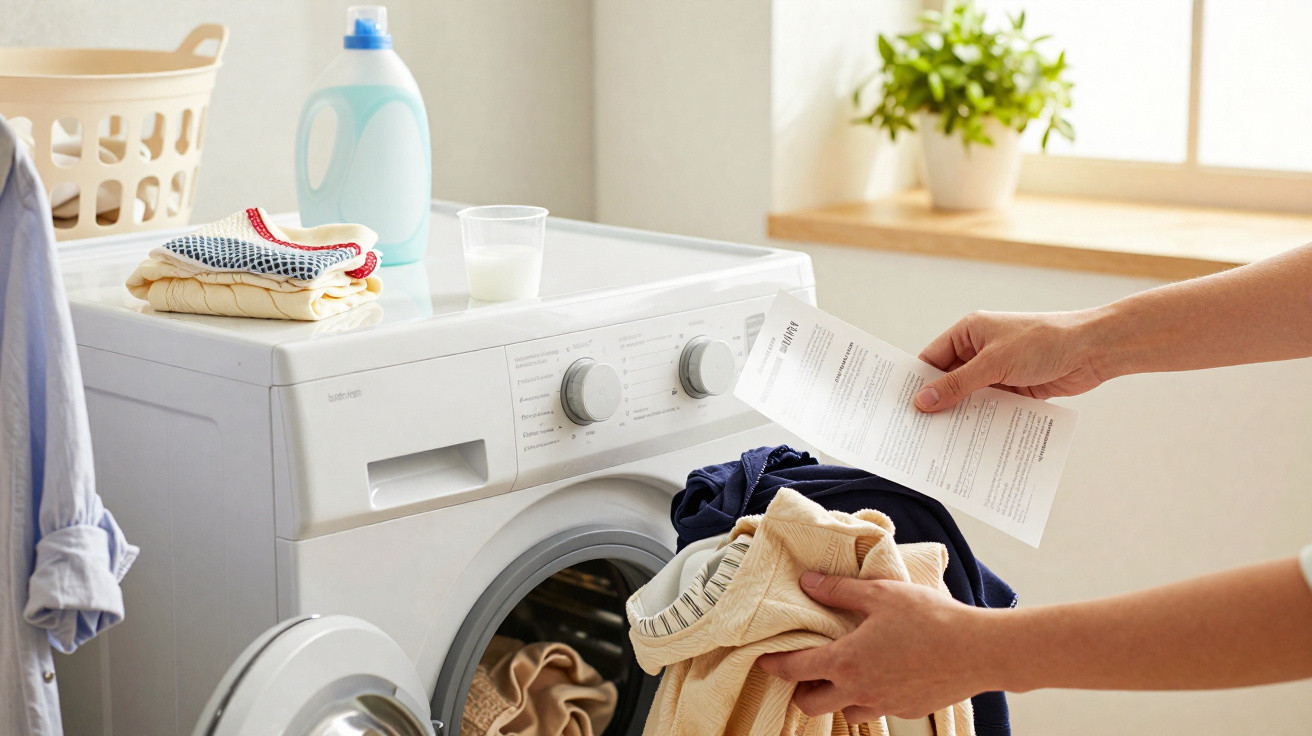
How we quietly abuse our washing machines without noticing
A máquina de lavar fica ali, discretinha no canto da área de serviço, enquanto a semana vai se acumulando em uma pilha só: branco junto com jeans escuro, roupa de academia grudada em toalha felpuda. Aí, na pressa, você escolhe “ciclo rápido”, coloca em 40°C e volta para o celular, com a sensação de que está sendo prático - e até mais “econômico”.
O problema é que, por fora, tudo parece funcionar. O ciclo termina, as peças saem com aquele “cheiro de limpo mais ou menos” e a rotina segue. Só que por dentro a história é outra: o tambor vai juntando borra de sabão, a borracha da porta vai escurecendo, camisetas perdem a forma mais cedo e o gasto sobe devagar, sem alarde. Para muita gente, é exatamente assim - com hábitos comuns e bem-intencionados - que se destrói a máquina e se desgastam as roupas.
We tend to treat the washing machine like a black box: throw things in, press a random button, collect “clean” laundry.
Manufacturers stack panels with options, but in real life, many households use the same two programs for everything. The rest might as well be hieroglyphs.
On a weekday evening, that confusion turns into habit. Quick cycle. Too much detergent, “just in case”. Half-open drawer with powder stuck to the sides.
Over time, this routine becomes so normal that we stop questioning it at all. We only notice something is off when the laundry smells damp or the machine starts rattling like an old bus.
A British survey a few years ago found that most people only use one or two programs on their machine, even though the panel offers ten or more.
In another study, a large share of users regularly overloaded the drum, often “to save time”, loading up huge bundles of clothes that never really had space to move.
One repair technician in London told me he can almost guess the household type by the smell of the drum: softener-heavy families, sports fans who overuse low-temperature cycles, tiny flats where the machine is sealed in a cupboard and never aired.
From his point of view, misuse isn’t spectacular. It’s repetitive. Boring. But relentless.
When you always wash cold, detergent residues don’t dissolve fully.
They mix with skin cells, lint and fat from clothes, and settle inside pipes and rubber seals. That grey “gunk” is basically a buffet for bacteria and mould.
At the same time, overloading the drum makes the motor work harder, and the shock absorbers age faster. Clothes rub rather than flow, fibers break, elastic weakens.
So the symptom you see – faded colours, dull towels, weird odours – is just the surface. Underneath, your machine is quietly wearing out years before its time.
Then there’s the eco-argument. Low temperatures and quick cycles feel green. Yet a badly maintained, overloaded machine uses more energy in the long run, because you rewash, add extra spin cycles, or end up buying a new appliance early.
Misuse hides behind good intentions, and that’s what makes it tricky.
Simple changes that make your machine last longer (and your clothes too)
The smartest “trick” is boringly simple: run one hot maintenance wash per month, empty, at 60°C or 90°C, with a bit of detergent or white vinegar.
That single ritual melts grease, flushes out residue and kills much of the bacteria party living in the drum.
Yes, it uses more energy once. But it avoids the hidden cost of repeated smelly washes, blocked filters and expensive call‑outs.
Think of it as brushing your machine’s teeth once a month.
Another crucial gesture: respect the filling line. Most manuals say you should be able to put a flat hand on top of the pile of clothes inside the drum.
If you have to push down with your forearm, it’s too full, no matter how tempting it is to “get it all done” in one go.
For delicate items, use a laundry bag and a slow-spin program. Jeans, towels and hoodies go together on a more robust cycle.
That separation sounds fussy at first, yet very quickly becomes a quiet act of respect for the fabric you already paid for.
Detergent is another misunderstood character in this story. Most people pour “by feel” and throw in extra when things seem dirtier.
The result is sticky residue and half-rinsed clothes. The machine then has to work harder to pump out the suds, and your laundry never quite smells fresh.
Try this instead: use the measuring cap, and go slightly under the recommended amount unless the load is really filthy.
Modern detergents are concentrated; your machine doesn’t need the foamy avalanche from the commercials to clean properly.
Liquid detergents tend to leave more film than powder, especially on cold cycles. Fabric softener, used daily, can coat fibers so much that towels stop absorbing water.
Soyons honnêtes : personne ne fait vraiment ça tous les jours, mais letting the detergent drawer dry open after each wash helps more than fancy “machine cleaners”.
And there are the small, almost invisible habits. Leaving the door slightly ajar between washes so the drum can breathe.
Wiping the rubber gasket with a cloth every now and then to remove trapped hair, coins, and that mysterious black fuzz.
One technician summed it up in a single sentence:
“Most breakdowns I see are not bad machines – they’re tired machines that have never been given a chance to breathe.”
That line stays with you the next time you shut the door right after the cycle and rush out.
We’re all busy. We all think: “It’s just laundry, who cares?” But a couple of small, lazy-friendly gestures stretch the life of a machine by years.
- Leave the door and detergent drawer slightly open after washing.
- Run one hot maintenance cycle per month.
- Use less detergent than you think you need.
- Check your pockets and the rubber seal for objects and lint.
- Respect the drum capacity, especially with heavy items like towels.
The quiet psychology behind bad laundry habits
On a deeper level, washing machines sit in a strange place in our homes.
They’re essential, almost intimate – handling our sweat, our stains, our kids’ accidents – yet emotionally invisible.
We don’t look at them with the same affection as a phone or a car. They are background servants.
So we rarely read the manual, rarely explore the settings, rarely question why the quick cycle has become our only answer to a full laundry basket.
There’s also a generational gap. Many younger adults moved into homes where the machine was already there, second-hand, with no instruction booklet in sight.
Habits get passed through fragments: “My mother always washed everything at 40°”, “My flatmate said to use the eco cycle”.
On top of that, marketing pushes “fast” and “easy” at every corner. Fast fashion, fast shipping, fast cleaning.
The slow, quiet care of an object over ten years doesn’t make big headlines or viral posts.
On a Sunday evening, when the laundry basket is overflowing and Monday is approaching, nobody wants to play scientist with spin speeds and water levels.
You just want it done. That’s the honest story in most homes.
Yet the moment you understand how one simple change – a hot empty wash, less detergent, a door left open – transforms the smell and feel of your laundry, it hits differently.
Suddenly, this heavy white box in the corner becomes a bit more alive, a bit more understandable, a bit less of a mystery.
On a sensory level, the reward is immediate. Clothes feel softer without softener overload. Sportswear stops smelling sour after one workout. The bathroom doesn’t carry that vague damp odour anymore.
On a financial level, stretching a machine from 7 to 12 years of use changes the maths of your household budget.
On an emotional level, there’s also something else going on. On a small scale, caring for the machine that cares for your clothes is a quiet form of taking care of your space, and of yourself.
We’ve all had that moment where you pull damp-smelling “clean” clothes from the drum and feel slightly defeated. Avoiding that is not about being perfect. It’s about being just a bit more conscious.
This isn’t about turning everyone into an appliance geek.
It’s about noticing that many of us are misusing our washing machines not out of laziness, but out of habit, misinformation, and the silent weight of daily life.
Once you see the hidden consequences – higher bills, shorter appliance life, more waste, clothes that age too fast – it’s hard to unsee them.
A few small changes, repeated without drama, quietly reverse that story.
And maybe that’s the real shift: not a big “laundry revolution”, but a series of tiny corrections that you share with a friend, a roommate, a parent.
One person starts leaving the door open; another tries a monthly hot wash; someone else finally cleans the filter and discovers all the lost coins.
The next time you stand in front of your machine, finger hovering over “quick wash”, you might pause for half a second.
That small pause, that tiny question – “Is this really the best way?” – is where everything begins to change.
| Point clé | Détail | Intérêt pour le lecteur |
|---|---|---|
| Moins de cycles à basse température | Alterner avec un lavage à 60–90°C mensuel | Machine plus propre, odeurs réduites |
| Dose de lessive maîtrisée | Mesurer et réduire légèrement la quantité | Moins de résidus, vêtements mieux rincés |
| Aération et nettoyage légers | Laisser la porte entrouverte, essuyer le joint | Durée de vie prolongée, moins de pannes coûteuses |
FAQ :
- How often should I clean my washing machine?Once a month is a solid rhythm for most households: one hot maintenance cycle and a quick wipe of the rubber seal and detergent drawer. - Is washing at 30°C or 40°C bad for clothes?No, it’s fine for most everyday loads, as long as you occasionally run a hotter wash to clear out residue and bacteria in the machine. - Do I really need fabric softener?Not always. Many fabrics wash well without it, and towels even perform better when you skip softener or use it only occasionally. - How do I know if I’m overloading the drum?If you can’t slide a flat hand on top of the clothes inside the drum, it’s too full and your laundry won’t move or clean properly. - Why does my laundry still smell after washing?Odour usually comes from residue and bacteria in the machine: try a hot maintenance wash, less detergent, and leave the door open between cycles.






Comentários
Ainda não há comentários. Seja o primeiro!
Deixar um comentário