
Quando o luxo encontra uma parede de preto e branco
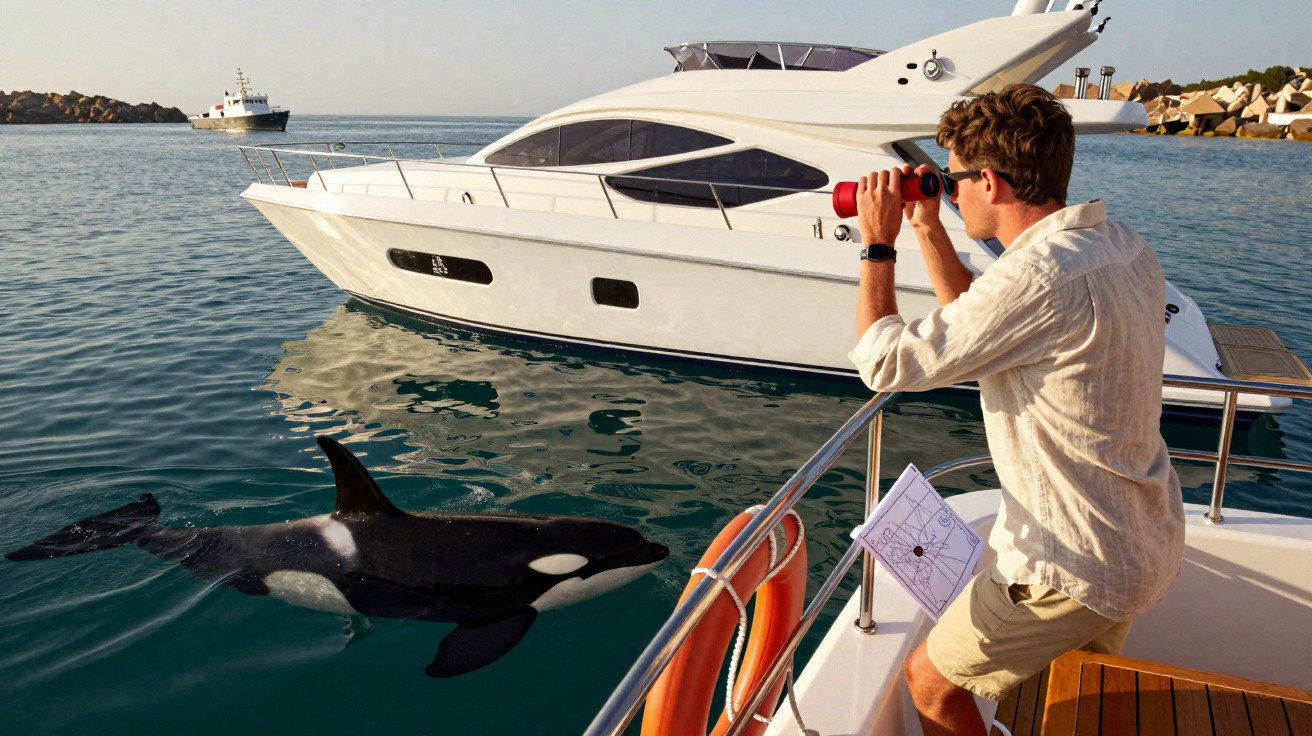
Tudo começa como mais um dia de navegação de vitrine: mar bonito, casco brilhando, gente com pressa para chegar ao próximo ancoradouro. Aí entra em cena um tipo de encontro que ninguém planeja. Em vez de golfinhos acompanhando a proa, surgem orcas, seguindo o barco por quilômetros e batendo no leme até abrir lascas. Em alguns trechos de litoral, autoridades portuárias chegaram a declarar emergência, enquanto donos de iates de alto padrão correm atrás de uma vaga segura. O que parecia um parque de diversões para poucos virou um choque direto com a conservação.
A noite também muda o clima rápido. No píer, as luzes de convés acendem uma a uma, e o cheiro de diesel se mistura ao sal. Um iate de cerca de 21 metros entra mais rápido do que deveria, defensas rangendo, tripulação pálida e tensa enquanto o rádio estala com alertas quase sussurrados sobre “sombras preto-e-branco” à frente.
No cais, uma mulher aperta uma carta náutica enrolada como se fosse um bicho de estimação, encarando um mar escuro que, de repente, parece cheio demais. Um pescador velho ao lado resmunga que o oceano lembra de quem sabe escutar. Sem perceber, eu prendo a respiração.
Então, o mar fica quieto.
It starts with a ripple behind the transom. A dorsal fin arcs, then another, and the deck mood pivots from champagne to clenched teeth. In recent weeks, pods have tracked boats for miles, bumping and ramming rudders like a boxing combination, while panicked calls flood the emergency channel. **The collision is bigger than hull versus animal.** It’s money versus meaning, spectacle versus species that refuse to be background scenery.
Ask the skipper of the blue-hulled sloop who limped in with no steering, towed by a RIB like a kite on a short string. He swore the orcas didn’t look angry, just focused, peeling off and returning, testing the blade until it gave way with a sigh. Local groups say interactions number in the hundreds since the first reports a few seasons back, with a cluster of incidents rolling through like summer squalls. One boat owner showed a bill with five figures and a hand that would not stop shaking.
Marine biologists point to learning and play, a kind of culture among the whales that spreads like a trend through a school. Rudders are irresistible levers, the ultimate fidget toy in a world of current and echo. There’s also the backdrop we pretend not to see: depleted fish stocks, heavy traffic, sonar noise, a sea that feels busier and meaner. Rich boats are the visible tip, an easy headline, while longliners, day sailors, and patrol craft share the same uneasy water.
How to ride out an orca encounter at sea
First rule: reduce the drama, not increase it. Take the wind out of the moment by slowing to a crawl, neutral on the engine, helm steady and hands light. Many skippers kill the motor entirely and let the boat drift while crew move weight forward, making the stern a dull target. **Drop the need to outrun.** Bring sails down if they flog, but do it calmly, like you’re making tea.
Big mistake? Revving in panic and throwing foam like a wounded fish. Another is banging the hull with a boathook or trying to shove a giant jaw away as if it were a fender. Breathe. Call it in on the radio and give your position in plain words. We’ve all had that moment when the body surges with adrenaline and every action feels urgent. Let it pass. Let’s be honest: nobody really does that every day.
Listen to the people who’ve watched this shift up close.
“They’re not attacking you. They’re exploring the one part of your boat that speaks their language: pressure, movement, resistance,” said a field researcher leaning on a coil of salt-stiff rope. “If you take the theatre out of it, most encounters fizzle.”
- Throttle back or neutral. Keep a straight course if any steerage remains.
- Silence on deck, no splashing. Move crew forward, stay low.
- Do not feed or throw objects. Avoid sharp rudder swings.
- Radio your position and status. Wait. Let the pod lose interest.
- Afterwards, log the time, location, and behaviour for science teams.
The clash no one wanted, laid bare by the tide
The emergency order isn’t just about damaged yachts. It’s a mirror held up to a coast where the moneyed dream of freedom meets a protected predator with its own rules. Ports are now split between those who flee and those who think staying might help, while insurance brokers write new clauses that read like weather forecasts. The talk on the pontoons turns to ethics between bites of marina pizza.
One camp wants exclusion zones and fast fixes, the kind that erase friction with good lawyers and louder engines. Another asks what it means to share water with a mind that maps the world by listening, not by owning. A pod doesn’t see cashmere or chrome. It feels a rudder push back. It stays until curiosity is sated.
Lean in to that thought. The orcas are not villains, and the yacht owners are not cartoon heirs. They are neighbours in a liquid city where the streets change hour by hour. **The sea keeps the score, and it does not take sides.**
These nights will echo for a while. A few broken rudders, a few humbler itineraries, and perhaps a new patience that money can’t buy. Share the water, log the data, slow the heartbeat, and remember that the quiet parts of the ocean carry the story further than any siren. The next calm day will look ordinary, and the next dark fin will say otherwise.
| Point clé | Détail | Intérêt pour le lecteur |
|---|---|---|
| Orcas targeting rudders | Pods ram and nudge steering gear, often after tracking boats for miles | Understand the pattern and reduce panic on board |
| Safe response at sea | Slow or neutral, avoid splashing, move crew forward, radio position | Practical steps that lower risk and stress |
| Why it’s happening | Learned behaviour, curiosity, noisy waters, shifting prey dynamics | Context that turns fear into mindful seamanship |
FAQ :
- Are orcas trying to sink yachts?Most evidence points to exploration of rudders, not an intent to sink. Damage happens, yet capsizes are rare.
- Should I outrun a pod?Speed ramps up noise and drama. Slowing or stopping tends to shorten encounters.
- Will insurers cover this?Policies vary. Many now treat orca incidents like weather events, with documentation required.
- What do scientists recommend?Limit stimuli, avoid contact, report the interaction with time and position for monitoring.
- Is culling on the table?These animals are protected. Management leans on data, routing, and education, not lethal force.





Comentários
Ainda não há comentários. Seja o primeiro!
Deixar um comentário