
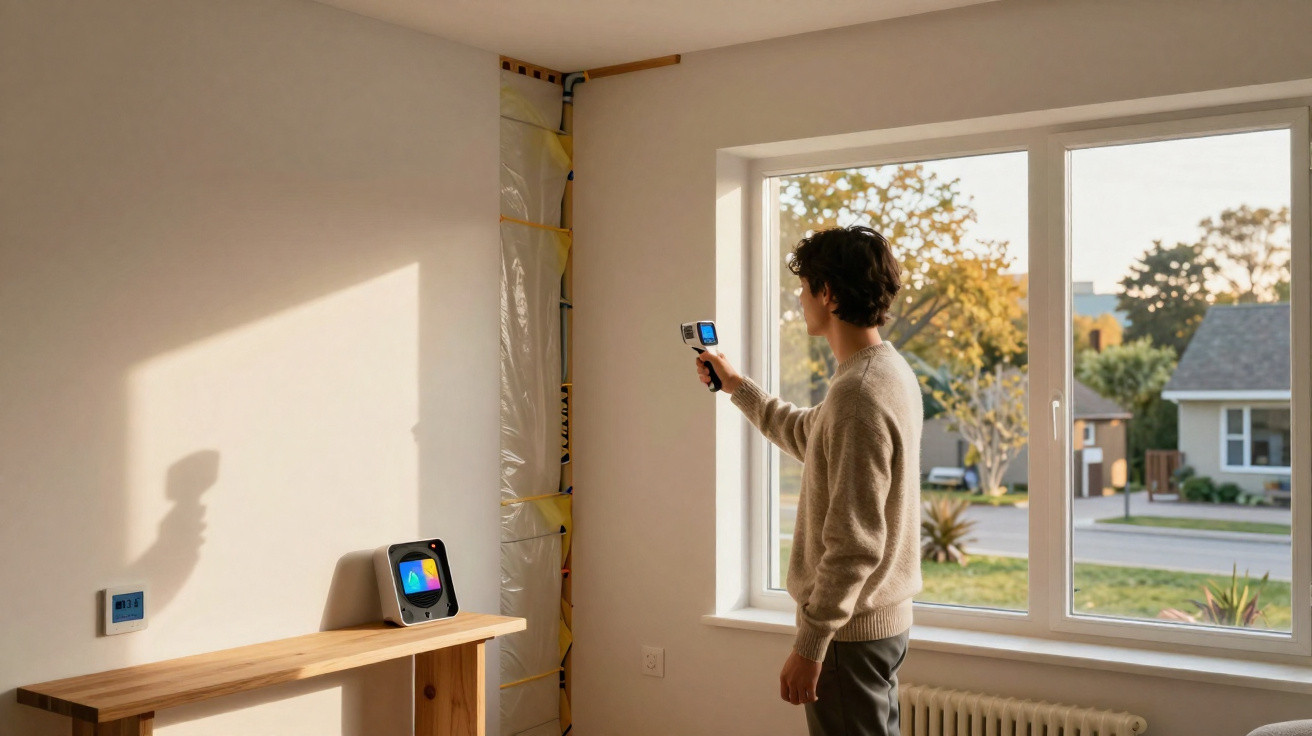
Comfort begins before the meter
Eu achava que o isolamento seria o “capítulo final”: ambientes mais quentes, conta de energia mais leve, menos reclamação no inverno. Até que um engenheiro da obra me mostrou, na prática, por onde o calor estava escapando, como a ventilação estava mal resolvida e como os ajustes do sistema de aquecimento (ou do ar-condicionado) estavam fora do ponto.
Foi aí que a casa começou a funcionar como um conjunto. Com as frestas sob controle, o ar entrando do jeito certo e o sistema regulado, o conforto apareceu antes mesmo de eu notar os números - e a economia veio sem precisar ficar lembrando de mexer em válvula, termostato ou janela.
People expect to notice the numbers first. You often notice your body instead. Fewer cold corners. No twitchy draft under the skirting. A wall you can touch without a shiver. When surface temperatures rise and even out, comfort stops feeling like a hunt for hotspots. Condensation retreats. You use every room the same way, not just the one with the sunny chair.
External insulation cuts heat loss through the shell and slows down heat gain in summer afternoons. Think of it as smoothing spikes. The boiler or heat pump cycles less. The room swings narrow. Energy spend drops because your home stops fighting itself.
Insulation shines when the house works as a team: airtight shell, clean ventilation, tuned system, and no sneaky thermal bridges.
What makes insulation actually work
Three checks decide whether that new “coat” earns its keep: air tightness, ventilation, and system balance. Miss one, and the gains leak out in different clothing.
Air tightness, the quiet partner
Heat does not just conduct through walls. It also gets carried by uncontrolled air movement. Gaps around loft hatches, sockets on external walls, old roller shutter boxes, and window frames create steady losses. Seal them with gaskets, tapes, and airtight back boxes. Ask for a blower-door test before and after the work. A decent target for existing homes is around 3–5 air changes per hour at 50 Pa; many older properties begin above 8 ACH50. Every step down cuts drafts and lets the insulation do its job.
Chase the leak with a smoke pencil on a windy day. If the smoke bends at a socket, that’s not a party trick. It’s your money leaving.
Ventilation without waste
Fresh air is essential, but leaving windows wide open can dump heat in minutes. It’s possible to ventilate with less waste. Use short, intense airing in winter, or install single-room mechanical units with heat recovery where humidity spikes. Bathrooms and kitchens usually benefit first. Keep indoor relative humidity around 40–55%. That range is kinder to your lungs, wood floors, and paint-and it helps keep mould away once cold surfaces warm up.
Tune the heating system
After insulation, your system should work in smaller “sips.” Reduce the flow temperature. Balance the radiators. Use thermostatic valves according to how each room is used. Heat pumps need the right curve and longer, gentler runs. Boilers do better with lower setpoints and weather compensation. If you upgraded the building fabric, adjust the controls too-or you’ll be driving with the handbrake on.
- Seal obvious gaps before the cold hits: loft hatches, pipe penetrations, window perimeters.
- Fix thermal bridges around balconies, lintels, and slab edges or add targeted insulation.
- Adjust flow temperatures and scheduling after works; monitor for a week.
- Add shading for summer: external blinds, shutters, or even vines on the sunniest face.
- Track humidity and CO₂ with small monitors; guide habits, not guesses.
Summer matters as much as winter
External insulation has a second job in July. It slows the afternoon heat wave that typically peaks between 3 and 6 p.m. Denser materials add time lag, so indoor temperatures peak later and at a lower level. Combine that with external shading and night purges, and you can drop peak room temperatures by several degrees. Your fan can take a break. Your heat pump avoids expensive running during the hottest hours.
How much money are we talking about?
Results depend on climate, wall type, and the starting condition of the home. Many retrofits see 20–40% lower heating energy use when insulation comes together with air sealing and a few control tweaks. Infiltration alone often represents 15–30% of space heating in leaky homes. Cut that, and the boiler can run more calmly.
Costs vary a lot as well. In the UK, external wall insulation commonly sits around £90–£150 por metro quadrado for straightforward façades, plus scaffolding and detailed finishing. In the US, expect $12–$25 per square foot depending on finish and repairs. Payback improves when grants are available or when fuel prices rise. Check local schemes such as the Great British Insulation Scheme or state-level rebates under federal incentives in the US.
| Element | Quick check | Why it pays |
|---|---|---|
| Air tightness | Blower-door test; target 3–5 ACH50 after works | Less draft, better comfort at lower thermostat settings |
| Ventilation | Humidity 40–55%; boost extraction where you cook or shower | Healthier air, fewer mould risks, lower heat loss from airing |
| System tuning | Lower flow temp; balance radiators; update schedules | Longer cycles, less cycling loss, quieter operation |
| Thermal bridges | Thermal imaging on a cold morning | Warmer corners, stable paint and plaster, real-life efficiency |
Materials are not one-size-fits-all
Expanded polystyrene offers strong winter performance with a competitive price. Mineral wool adds fire resistance and improved sound control. Wood fibre brings density and better summer delay. The right choice depends on street noise, sun exposure, planning constraints, and budget. Any of them can underperform if gaps or wet detailing show up around edges, sills, and balcony slabs.
If you can only do one thing this year, fix the leaks. If you can do two, add ventilation you can trust. Insulation then shows its true value.
What to ask before signing a quote
Strong projects start with clear documentation. Ask for U-value calculations, junction details, and exactly how the crew will handle corners, pipe exits, and vents. Request a blower-door test written into the contract. Confirm fire barriers and fixings for your substrate. Check where scaffolding ties will go and how they’ll be made good afterward. Push for a final walkthrough in the rain, not only on a sunny day.
Common pitfalls to avoid
- Painting over mould without warming the surface or ventilating properly.
- Insulating the wall but leaving rotten seals around frames.
- Cranking the boiler back to old settings after works.
- Skipping summer shading and blaming insulation for warm rooms.
- Ignoring trickle of rainwater at a gutter that soaks the new layer.
Small tools that make a big difference
A £15 humidity sensor teaches you more about your home than most manuals. A smoke pencil reveals hidden leaks around sockets and skirtings. A smart thermostat with weather compensation-even on a boiler-can reduce fuel use once you lower flow temperatures. Thermal imaging, even with a borrowed camera on a frosty morning, makes losses visible: blue at lintels, dark at slab edges, bright patches at leaky frames.
Extra context for planners and homeowners
For a quick reality check, do a simple heat-loss sketch. Take the external wall area, multiply by the current U-value, and estimate the drop after insulation. Add an infiltration loss estimate based on ACH50, then convert to natural ACH using a seasonal factor. This back-of-envelope view shows where the biggest “bite” is: fabric, air, or windows. Spend where it matters most.
One final note on moisture risk: when you change a wall’s temperature profile, the dew point shifts. Detail window reveals, sills, and vent penetrations carefully. Keep rain out of the new layer. Maintain ventilation in kitchens and bathrooms. Do that, and the calm you feel-quiet warmth and no damp corners-will last through this winter and the next.






Comentários
Ainda não há comentários. Seja o primeiro!
Deixar um comentário