
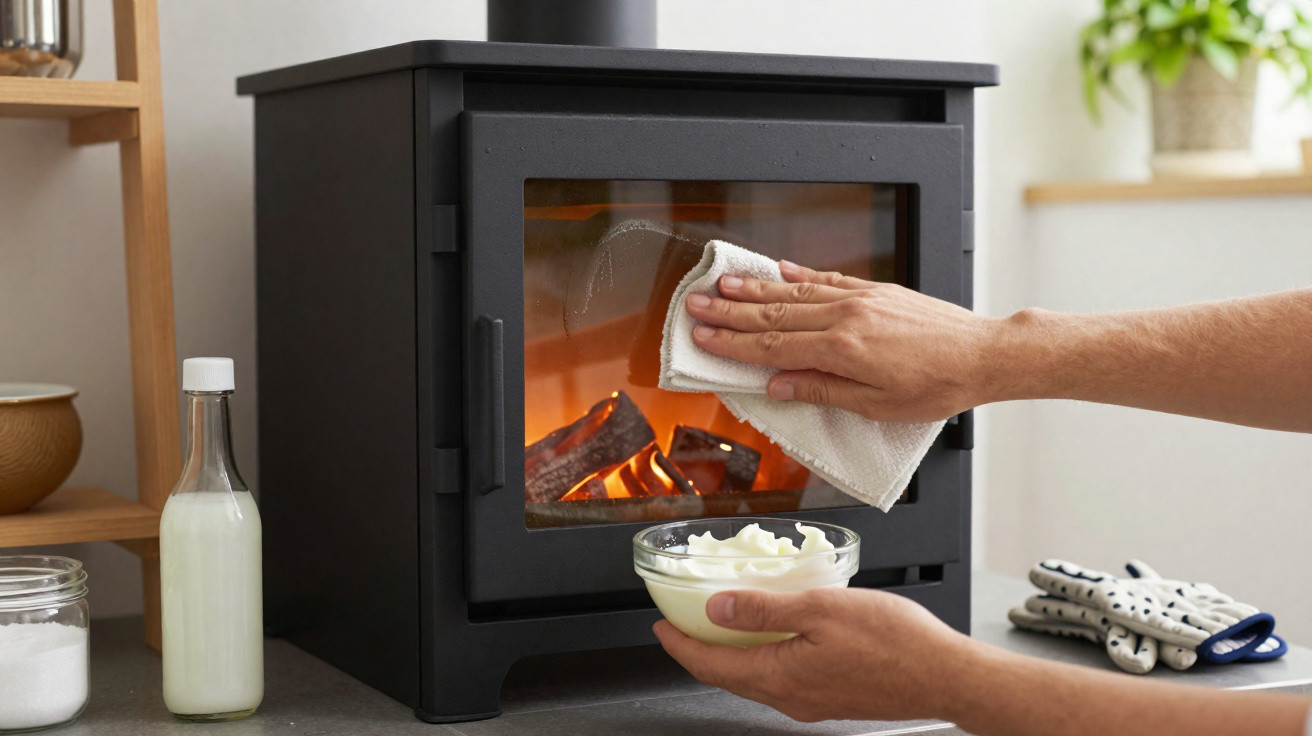
Why your stove glass turns black so quickly
Quem tem fogão a lenha ou salamandra sabe: você acende o fogo para curtir o calor e, em pouco tempo, o vidro já fica escurecido e “some” a visão das chamas. A boa notícia é que, antes de apelar para cinza espalhada pela cozinha ou produtos fortes, dá para resolver com uma combinação simples e barata que costuma estar no armário.
Para ajustar a forma de limpar (e até evitar que suje tanto), vale entender por que o vidro escurece tão rápido. Aquele véu marrom-escuro não é só “sujeira”: é uma mistura de fuligem, alcatrão e partículas não queimadas que saem da combustão.
- Damp or poor-quality fuel: Wood that isn’t properly seasoned contains a lot of moisture. That water has to evaporate before the wood can burn hot, which cools the fire and generates more smoke. More smoke means more deposits on the glass.
- Cool, incomplete combustion: If the fire never really gets going, combustion remains incomplete. The stove then releases more tiny particles that cling to the glass instead of going up the flue.
- Air controls set too low: Choking the air supply makes logs smoulder instead of burn. That low-oxygen burn is a recipe for a fast-blackening pane.
- Running the stove in “slumber” mode: Many people throttle back their stove at night to “save wood”. It does cut consumption, but it also encourages tar and soot build-up on both glass and flue walls.
Any setting that keeps the fire cool, slow and smoky will cloud your glass faster than you think.
The simple trick that cleans stove glass without ash
O método tradicional usa cinza de madeira úmida como abrasivo. Funciona, mas faz bagunça, pode riscar o vidro se vier algum grãozinho de areia junto e, muitas vezes, exige várias passadas. Uma alternativa menos comentada usa dois itens bem comuns na cozinha: vinagre branco e bicarbonato de sódio.
Usados em conjunto, eles soltam a fuligem com rapidez e você ainda evita aquela pasta cinza de cinza com água.
Why vinegar and baking soda work so well
- Vinegar acts as a degreaser: White vinegar is mildly acidic. It helps dissolve the tarry, greasy film that clings to the glass after hours of burning.
- Baking soda adds gentle abrasion: Those fine grains are soft enough not to scratch stove glass, yet rough enough to lift off soot and residue.
- The fizz helps loosen grime: When the two meet, the gentle effervescence disrupts the layer of deposits and makes them easier to wipe away.
The mix of vinegar and baking soda gives you a low-cost, low-tox cleaner that eats through soot in seconds.
Step-by-step: how to clean your stove glass in minutes
Step 1: prepare the mixture
Só limpe o vidro quando o fogão estiver totalmente frio. Encoste no painel primeiro; se estiver sequer morno, espere mais.
- Pour two parts white vinegar into a small bowl or container.
- Add one part baking soda slowly to control the fizz.
A mistura vai espumar por alguns segundos. Quando as bolhas baixarem, você fica com uma pastinha fácil de espalhar.
Step 2: apply to the glass
- Dip a soft cloth or non-scratch sponge into the paste.
- Spread it across the inside of the glass using small circular motions.
- Leave it on stubborn patches for a minute or two before scrubbing lightly.
Em manchas muito antigas e “queimadas”, às vezes ajuda repetir a aplicação. No dia a dia, porém, a fuligem costuma sair quase de imediato.
Step 3: rinse and dry
- Wipe the glass with a clean, damp cloth to remove any white residue.
- Finish with a dry microfibre cloth or old cotton T-shirt to leave a clear, streak-free finish.
Once you can see the firebox bricks clearly through the glass, you’ve removed more than enough soot for an efficient burn.
Natural alternatives if your cupboard is empty
Naqueles dias em que falta vinagre ou bicarbonato, algumas opções simples também quebram o galho. E nenhuma delas depende de spray “especial” para fogão.
- Black soap or liquid castile soap: Mixed with warm water, it cuts through greasy deposits without attacking seals or coatings.
- Household alcohol: Products like rubbing alcohol can dissolve tar-like residues very quickly; just ventilate the room while using them.
- Hot water and scrunched newspaper: Dampen newspaper, dip it in a little fine ash (if you’re willing to use it) or just use hot water. It’s more suited to light soiling between deeper cleans.
Quick comparison of common methods
| Method | Mess level | Best for |
|---|---|---|
| Vinegar + baking soda | Low | Regular cleaning, moderate to heavy soot |
| Damp ash on newspaper | High | Old-school users, light to moderate soot |
| Black soap solution | Low | Delicate glass, eco-conscious households |
| Chemical spray cleaner | Medium | Occasional deep cleans when deposits are extreme |
How to slow down soot build-up on your glass
Vidro que permanece limpo por mais tempo não é só questão de estética; geralmente indica que a queima está mais eficiente e mandando menos partículas para a chaminé.
- Use properly seasoned wood: Aim for logs with a moisture content below about 20%. Many UK and US suppliers now label this clearly.
- Favour hardwoods: Species like oak, beech or ash burn hotter and cleaner than softwoods such as pine or spruce, which can spit resin and soot.
- Let the stove reach working temperature: After lighting, run it with plenty of air for at least 10–20 minutes so the firebox heats properly.
- Avoid constant slumbering: Long, low burns overnight might be tempting, but they greatly increase glass and flue deposits.
- Clean little and often: A quick wipe once or twice a week during heavy use prevents thick layers that need aggressive scrubbing.
Cleaner glass usually points to a hotter, more efficient burn – which means more heat in your living room and less smoke in your chimney.
Why many households now skip chemical stove cleaners
As prateleiras de mercado estão cheias de sprays “para vidro de fogão” prometendo resultado rápido. Eles funcionam, mas frequentemente levam ingredientes cáusticos que podem irritar pele e vias respiratórias, especialmente em salas menores ou em ambientes com pouca ventilação.
Já vinagre e bicarbonato custam muito pouco, não soltam cheiro forte e tendem a ser bem mais suaves com as guarnições (vedações) e as partes metálicas ao redor da porta. Para famílias com crianças, pets ou para quem tem asma, trocar um spray agressivo por uma mistura caseira e neutra pode melhorar de forma perceptível a qualidade do ar dentro de casa durante a época de frio.
What soot and creosote actually mean for your home
A sombra no vidro é só a parte visível. Depósitos parecidos se acumulam dentro do duto como creosoto, uma substância parecida com alcatrão que vira um risco sério de incêndio se for ignorada. A mistura de vinagre não alcança a chaminé, mas serve como alerta: se o vidro amanhece preto todo dia, é bem provável que o duto esteja criando crosta mais rápido do que deveria.
Limpa-chaminés profissionais tanto no Reino Unido quanto nos EUA recomendam pelo menos uma limpeza por ano para quem usa fogão a lenha com frequência - e, às vezes, mais se o uso for diário. Somar uma rotina de limpeza do vidro com a varrição periódica reduz bastante o risco de incêndios na chaminé e de retorno de fumaça para dentro.
Real-life routines that make the trick effortless
Na prática, o mais fácil é encaixar a limpeza nos hábitos que você já tem. Tem gente que deixa um potinho com vinagre separado e a caixa de bicarbonato perto do cesto de lenha. Ao preparar o primeiro fogo do fim de semana, faz uma passada rápida no vidro ainda frio para tirar a camada do dia anterior.
Outros preferem um “check semanal” do fogão: esvaziar as cinzas, conferir as vedações da porta, observar a cor do vidro e dar uma esfregada rápida com vinagre e bicarbonato. Esses poucos minutos ajudam a manter as chamas visíveis, a queima mais eficiente e a sala mais próxima daquele clima aconchegante que motivou a compra do fogão.






Comentários
Ainda não há comentários. Seja o primeiro!
Deixar um comentário